
Lightning Fast Turnaround!
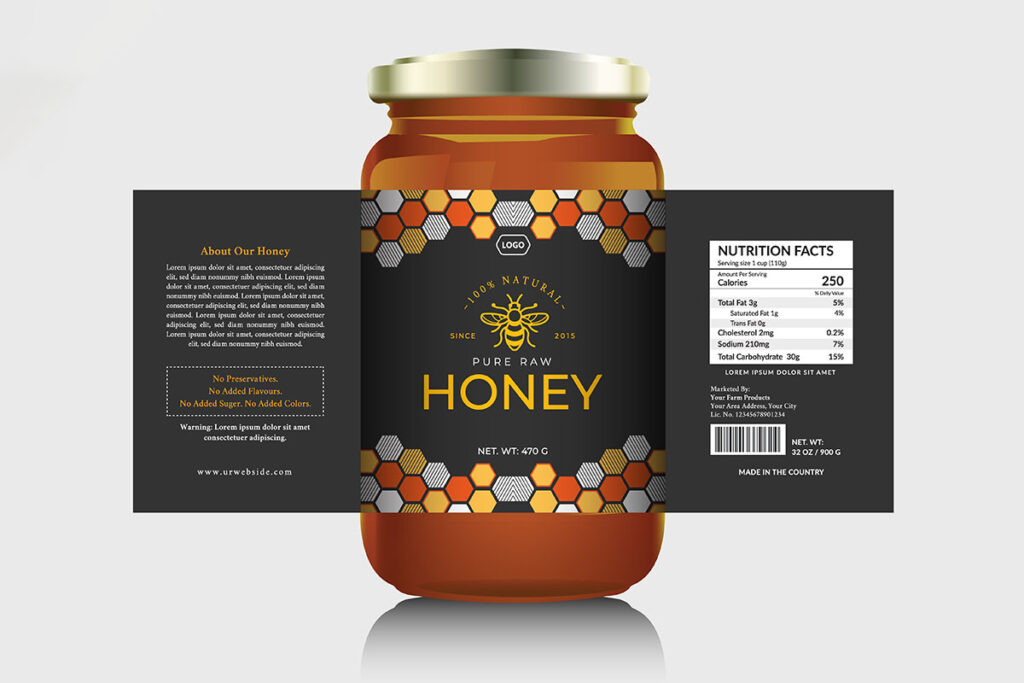
Austin, Texas stands as a major consumer packaged goods (CPG) hub. Local entrepreneurs launch products into retail channels daily, ranging from hot sauces and coffees to functional beverages and snacks. Securing placement on the shelves of local grocers, specialty boutiques, or national chains requires more than a good recipe and brand identity. It demands compliance with regulatory standards set by the U.S. Food and Drug Administration (FDA).
Label compliance errors lead to unexpected expenses, inventory holds, delayed retail rollouts, or product recalls. Compliant packaging balances legal guidelines, legible typography, and durable print execution.
The FDA divides packaged food and beverage labels into two main visual areas: the Principal Display Panel (PDP) and the Information Panel.
| Principal Display Panel (PDP) | Information Panel |
| Location: Front of Package / Primary View | Location: Immediately to the Right |
| Statement of Identity (Name) | Nutrition Facts Label |
| Net Quantity of Contents | Ingredients List |
| Primary Brand Logo | Allergen Declarations (FALCPA) |
| Marketing Claims | Manufacturer / Distributor Details |
The Principal Display Panel represents the front surface of the package displayed under customary retail conditions. The Information Panel sits immediately to the right of the PDP. If space constraints make the panel to the right unusable, the information panel goes on the next available adjacent panel. Federal disclosures must reside on these designated surfaces, adhering to minimum font height and contrast rules.
Two key elements must appear on the PDP without exception.
The Statement of Identity is the common or usual name of the food item. If a standard name does not exist, use a descriptive term or a well-understood fanciful name. Labeling a bottled drink merely as “Austin Sunrise” fails federal guidelines. The label must explicitly state “Cold-Pressed Orange and Carrot Juice.” This statement must appear prominently on the PDP in bold type, positioned parallel to the base of the package.
The Net Quantity of Contents declaration states the total amount of food or beverage inside the package, excluding container weight. FDA rules require this statement within the bottom 30 percent of the PDP. Print it in a color that strongly contrasts against the background. Federal regulations mandate dual declarations for most products, displaying measures in both U.S. Customary units (fluid ounces, pounds) and Metric units (milliliters, grams). Typography height depends on the total surface area of the PDP.
Claims like “Organic,” “Non-GMO,” “Gluten-Free,” or “Keto-Friendly” attract shoppers, but carry legal obligations. Nutrient claims must adhere to standardized FDA definitions. Third-party certifications require verified credentials before incorporating logos onto final artwork.
The Information Panel houses nutritional and safety information. The FDA requires three key disclosures on this panel, which must remain grouped together without non-essential text or graphics breaking them up.
The Nutrition Facts panel must conform to standardized formatting, including precise font weights, border lines, and spacing. FDA rules require serving sizes to reflect realistic consumption habits based on Reference Amounts Customarily Consumed (RACC). Dual-column labeling is mandatory for containers holding two to three servings that a consumer might drink or eat in one sitting. Entries like added sugars, vitamin D, calcium, iron, and potassium must be explicitly quantified alongside calorie and macronutrient data.
Ingredients must appear in descending order of predominance by weight, starting with the heaviest component. Common names are required for all ingredients. The Food Allergen Labeling and Consumer Protection Act mandates clear disclosure of the nine major food allergens:
List allergens directly within the ingredient statement using common names, or highlight them in a dedicated “Contains” statement immediately following the ingredient list.
Your package must identify the commercial entity responsible for the product. This disclosure requires the legal business name, street address, city, state, and ZIP code of the manufacturer, packer, or distributor. If the business location appears in a current public directory, the street address may be omitted.
Austin food and beverage products face central Texas heat, humidity, refrigeration, and deep-freezer storage. Selecting appropriate substrates and protective finishes maintains compliance throughout shelf life.
Standard paper labels without protective coatings deteriorate when exposed to moisture or oil, resulting in smudged typography or peeling corners. For cold beverages, craft beers, sauces, or dressings, water-resistant synthetic stocks like BOPP (Biaxially Oriented Polypropylene) offer superior resilience. Combining strong substrates with protective matte or gloss laminations protects disclosures against abrasion, condensation, and sunlight during transit and retail display.
The FDA mandates that ingredient lists, allergen disclosures, and information panel text use a minimum type height of 1/16 of an inch based on the lower-case letter “o”.
No. The Nutrition Facts panel must appear on either the Principal Display Panel or the Information Panel immediately to its right, making it accessible to consumers during purchase.
Yes. Businesses employing fewer than 100 full-time workers and selling under 100,000 units annually in the United States can apply for the Small Business Nutrition Labeling Exemption if they make no nutritional claims.
Undeclared allergens represent the primary cause of food recalls nationwide. Mislabeled packaging triggers FDA warnings, mandatory product withdrawals, and inventory losses.
Waterproof BOPP material paired with a permanent acrylic adhesive offers high resistance against condensation, moisture, and low temperatures without peeling or bubbling.
Launching a food or beverage product in Austin requires balancing regulatory compliance with clear design. Organizing your display panels, declaring allergens correctly, and selecting durable materials protects your business against print revisions and retail distribution delays. Proper packaging presents a professional image on store shelves.
Work with a local print partner experienced in CPG requirements when transitioning artwork into physical labels. The Bumper Sticker provides custom label printing, durable waterproof materials, and production for Texas food and beverage brands. Request sample packs or submit artwork online to get a quote for your next production run.
|
Uploaded
Failed
|
 |