
Lightning Fast Turnaround!
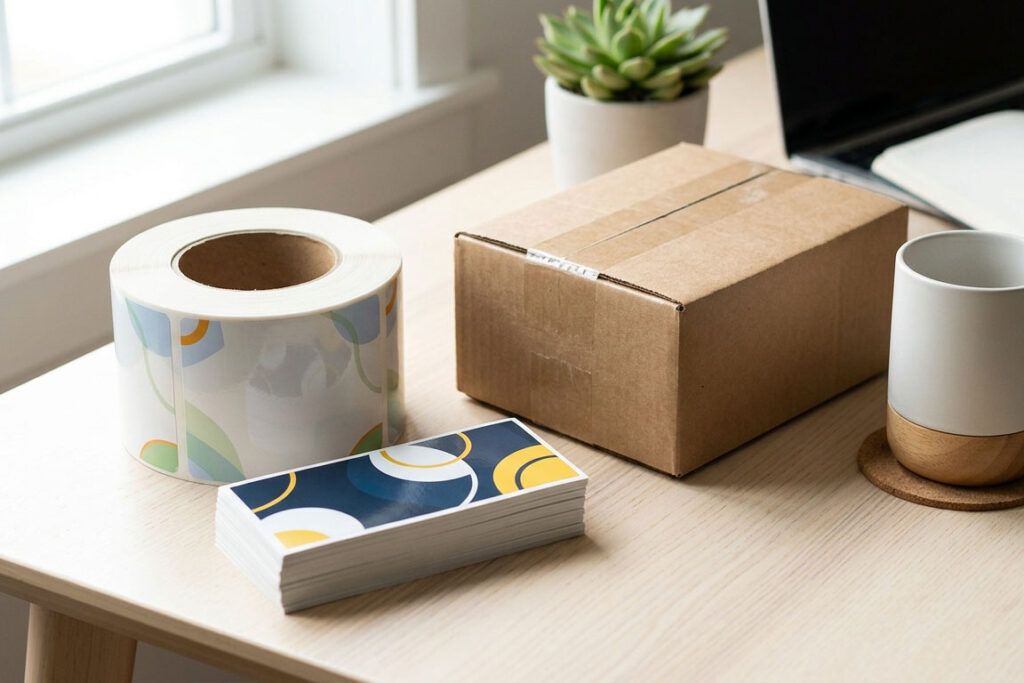
Product packaging and physical promos remain two of the most sensible ways to get your brand noticed. When setting up custom print orders, small business owners almost always run into two main options: custom roll labels and individual bumper stickers. They both show off your logo and company name, but they handle completely different tasks in your day-to-day operations.
Picking the right format comes down to how you plan to hand them out, how you apply them, and what kind of wear and tear they will face. Stick a light product label on a truck bumper, and rain will ruin it in days. On the flip side, using heavy vinyl bumper stickers to seal retail boxes burns through your budget and bogs down your shipping table.
Knowing how these options differ helps you spend your promo budget wisely while keeping your products looking sharp.
The main difference between roll labels and bumper stickers comes down to thickness, backing material, and adhesive strength. Each type goes through a specific setup depending on where it needs to stick.
Roll labels run on thin, flexible stocks like polypropylene, paper, or light vinyl. The thin material lets workers or machines unroll and apply them quickly across curved surfaces like jars, squeeze bottles, and cardboard boxes. These labels use lighter acrylic glues that grip clean surfaces instantly.
Bumper stickers rely on thick vinyl built for outdoor exposure. The heavy material stands up to rain, sun, highway speeds, and temperature spikes. Print shops use sun-resistant inks and add a clear top coat to protect against road grit and car washes.
Roll labels come wrapped tightly around a standard cardboard core. This design keeps thousands of labels compact, organized, and easy to store on a shelf or desk.
Bumper stickers arrive as individual pieces cut straight through the backing paper. That makes them easy to hand out, stack on a checkout counter, or toss into customer shipping boxes as free gifts.
To pick the right option, think about who is applying the graphic and where it will end up.
| Feature | Custom Roll Labels | Bumper Stickers |
| Primary Purpose | Product packaging & labeling | Brand awareness & giveaways |
| Application Method | Hand application or labeling machine | Hand application by the customer |
| Material Base | Thin film, paper, or polypropylene | Weatherproof heavy vinyl |
| Durability | Indoor use / minor moisture exposure | Outdoor UV & weather protection |
| Common Quantities | High-volume bulk orders | Small to large batch orders |
Roll labels shine when you need speed and high-volume consistency indoors. They make the most sense for physical goods and packaging setup:
Bumper stickers work best as standalone promo items that customers want to put on their own gear. They give your brand long-term visibility out in the world:
Order size changes your unit cost quickly. Roll labels offer large savings when you print in bulk. Running thousands of labels on a digital or flexographic press lowers the cost per piece, making them cheap for daily packaging needs.
Bumper stickers cost more per piece because of the heavier vinyl, extra clear coat, and individual cutting. However, they offer a higher return on engagement because people display them publicly. A sticker on a daily driver can catch thousands of eyes over several years, easily offsetting the original print cost.
Matching the format to your actual need keeps you from burning cash. Buying heavy vinyl graphics just to seal box flaps inflates your pack-out costs. On the flip side, handing out cheap paper labels at events means they end up torn or faded, which looks messy.
Designing artwork for roll labels requires a different approach than designing for car bumpers.
Product labels carry detailed text alongside your main logo. Since customers look at products up close, you can use smaller fonts, intricate graphics, and fine lines. Focus on clean hierarchy so ingredient lists or fine print stay readable without crowding your main branding.
Bumper stickers need bold graphics and high contrast so people can read them from a distance. Drivers and pedestrians only have a couple of seconds to process your message. Use strong fonts, simple colors, and minimal text. Stick to your main logo, a phone number, or a clean website URL instead of full sentences.
Standard paper roll labels break down quickly when wet or exposed to direct sunlight. Polypropylene roll labels resist moisture in refrigerators, but they lack the heavy protective layer needed to handle years on a vehicle bumper.
Bumper stickers use strong acrylic adhesives that grip painted metal, glass, and smooth plastic. They stay put through rain, snow, and heat, but can still peel off cleanly without leaving thick glue behind.
Store label rolls flat in a cool, dry room away from direct heat and sunlight. Keeping them in a stable environment prevents the backing paper from warping and keeps glue from oozing out the sides.
Vector files like AI, EPS, or vector PDFs give you the sharpest prints. Vector artwork scales up or down without getting blurry, keeping fine text and logos crisp on press.
Solid vinyl bumper stickers printed with UV inks last three to five years outdoors under normal conditions. Adding a clear protective top coat keeps the colors bright and protects against scratches.
Choosing between roll labels and bumper stickers comes down to where the sticker lives and who applies it. Use roll labels to streamline your packaging line, label product containers, and organize inventory. Reach for durable bumper stickers when you need weather-ready promos, event freebies, or mobile ads that travel with your customers.
Checking your surface material, weather exposure, and distribution plans before ordering makes print budget gain real results. Check out custom print options at The Bumper Sticker to order high-durability promotional materials built for your business.
|
Uploaded
Failed
|
 |