
Lightning Fast Turnaround!
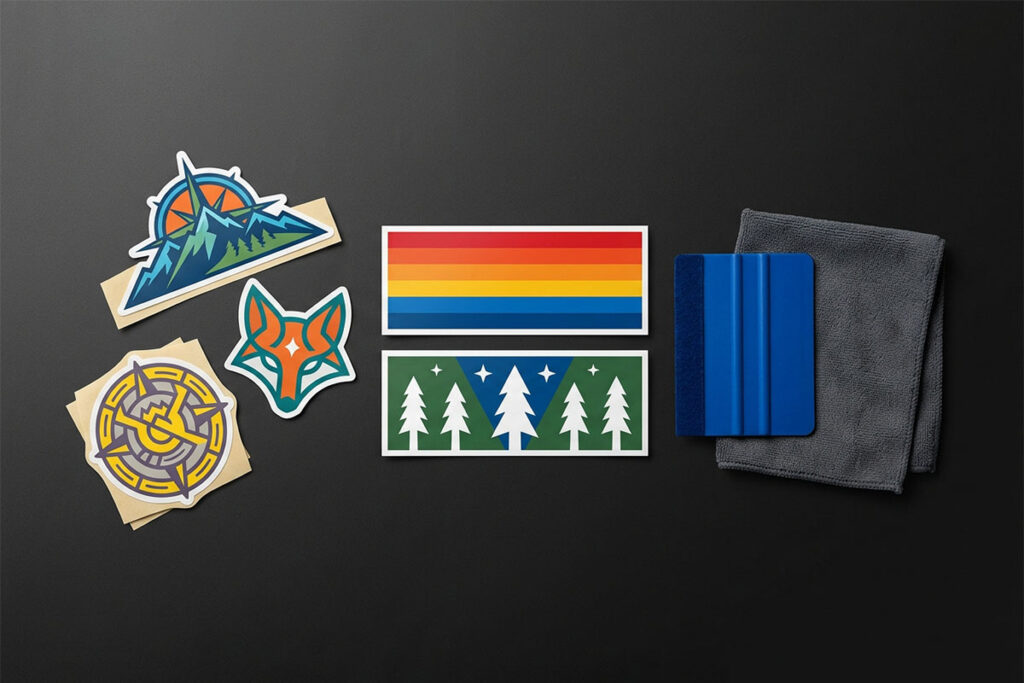
Choosing between die-cut decals and standard bumper stickers comes down to how you plan to use them, where they will live, and your overall budget. Both options work well for marketing or personal projects, but their materials, production steps, and finished looks are completely different.
Understanding these differences helps you pick the right format for your project, whether you are promoting a local business, handing out merch at events, or labeling commercial fleet vehicles.
Standard bumper stickers are traditional adhesive prints made in fixed geometric shapes like rectangles, ovals, or squares. Their backing paper matches the exact outer dimensions of the print, leaving a thin white or transparent margin around the design.
Most standard bumper stickers use thick vinyl paired with a permanent acrylic adhesive. A protective clear laminate sits on top to shield the ink from rain, sunlight, and road grit.
Because standard shapes offer plenty of flat surface area, they work best for:
Die-cut decals are trimmed to follow the exact outline of your visual artwork, logo, or lettering. Instead of sitting inside a square or rectangular box, the vinyl edge follows every curve and angle of your design.
During production, steel dies or computerized plotters slice through the top vinyl layer without cutting into the paper backing beneath. Once the excess vinyl is pulled away, only your custom-shaped graphic remains on the release paper.
Die-cut decals create a clean, integrated appearance on glass, polished metal, and vehicle paint. Without extra background material framing the graphic, the graphic looks direct, sleek, and almost painted on.
To pick the right option, check how these two styles compare across core features:
| Feature | Standard Bumper Stickers | Die-Cut Decals |
| Edge Shape | Fixed geometric shapes (rectangle, oval, square) | Exact contour of custom design |
| Background | Includes white or clear background frame | No background frame; trimmed to artwork |
| Visual Style | Traditional, clear, high contrast | Modern, sleek, direct graphic focus |
| Application | Simple peel-and-stick | Takes extra care around narrow points |
| Production | Fast turnaround time | Requires vector line setup and custom plot cutting |
Standard bumper stickers stand out thanks to solid rectangular backgrounds that pop against car paint. However, extra white margins can sometimes distract from detailed graphics. Die-cut decals solve this by removing all background filler, keeping full focus on the main symbol or logo.
Both styles use outdoor-grade vinyl and protective laminates that hold up against rain, snow, car washes, and harsh sun. That said, standard rectangular stickers have straight, continuous edges that resist peeling over long periods. Decals with sharp points or thin details might occasionally snag on automatic car wash brushes if the installation wasn’t completely flat.
Peeling and sticking a standard rectangle or oval takes zero effort. Placing complex die-cut decals takes a little extra patience to avoid air pockets, trapped dust, or creased tips on narrow sections.
Standard shapes run through automated high-speed cutters, keeping costs down for large orders. Custom die-cutting requires specific vector line files and a bit more machine time, which makes decals slightly pricier per unit.
No matter which style you pick, getting a long-lasting bond comes down to surface preparation. Dirt, wax, and road film keep acrylic adhesives from sticking properly.
Modern automotive vinyl uses acrylic adhesives that peel away cleanly when warmed gently with a hair dryer. Any leftover sticky residue wipes away using rubbing alcohol or targeted adhesive removers without pulling off clear-coat finishes.
Yes, high-grade vinyl stickers and decals with protective laminates stand up to automatic car washes. Just wait at least 72 hours after applying them so the bond sets completely.
Die-cut production requires vector files (such as PDF, AI, or EPS) with clean, defined cut lines. Vector paths show the plotter blades exactly where to slice around your artwork.
Outdoor bumper stickers printed on heavy vinyl resist moisture, rain, road salt, and snow. Cheap paper labels break down quickly outdoors, so stick with weather-resistant vinyl for vehicles.
Quality outdoor vinyl decals usually last 3 to 5 years under normal exposure without fading, cracking, or peeling, as long as the surface was cleaned before application.
Choosing between die-cut decals and standard bumper stickers comes down to your visual goals, installation spots, and budget. Standard shapes give you fast, cost-effective runs for text and slogans, while custom die-cut decals offer a clean, painted-on look for logos and detailed graphics.
For durable outdoor materials, sharp color reproduction, and clean edge trimming, order your custom prints at The Bumper Sticker. Select your dimensions, upload your vector graphics, and build long-lasting promotional prints made for real-world driving conditions.
|
Uploaded
Failed
|
 |