
Lightning Fast Turnaround!
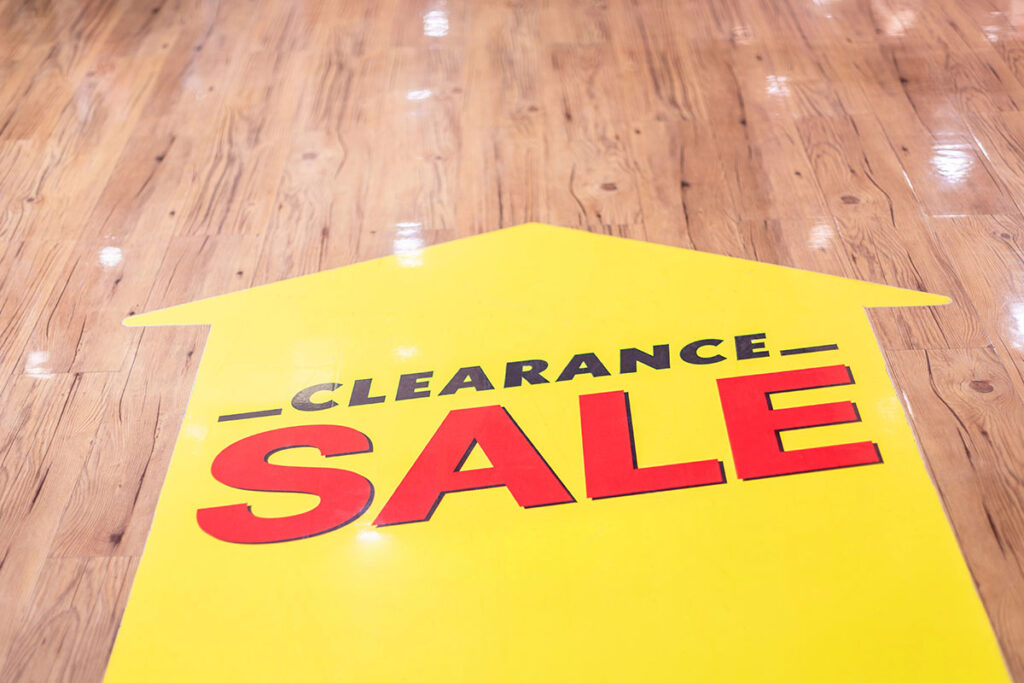
Retail spaces run on movement. Where customers walk, pause, and look directly affects what they notice and what they buy. For food and beverage retailers, markets, specialty shops, tasting rooms, and in-store promotional areas, floor decals in Houston can be a surprisingly effective way to shape that movement.
The catch? Floor decals have to do more than look nice. They need to be visible, durable, and safe. A decal that curls at the edges, gets slick when wet, or confuses the flow of traffic will cause more problems than it solves.
Done right with our Houston label designer, floor decals guide foot traffic, promote products, and support your branding without creating hazards. Here’s how to use them well.
Why use the floor for messaging? It comes down to how people move. Shoppers naturally look down as they walk. A well-placed floor decal lands right in their line of sight, something wall signs and shelf tags can’t always do.
Here are the main ways floor decals work for retail:
Getting the most from floor graphics comes down to two things: material quality and placement.
This is the single most important factor. Don’t use a standard vinyl sticker as a floor decal. It will get dangerously slippery when wet and won’t hold up under foot traffic.
Use material made specifically for floors. A professional floor decal has two parts:
That textured overlaminate provides the grip needed to handle foot traffic, cleaning, and spills while meeting safety standards. It protects the print from scuffs and fading, and it provides the friction that prevents slips.
A floor decal should be understood in a single glance. Complex designs with small text get ignored, or worse, they cause someone to stop suddenly in a busy aisle to read.
Use bold graphics and minimal text. An arrow, a shoe print, or a simple starburst works better than a paragraph.
Stick to high-contrast colors. The design needs to stand out from the flooring. Bright colors like yellow, red, and blue tend to work well.
Keep the message short. “Sale Ahead,” “New Product,” or your brand name is plenty.
Where you put the decal matters as much as what’s on it.
Place them in open, high-traffic areas. Main aisles and the space just inside the entrance are prime spots.
Avoid uneven surfaces, grout lines, or broken tiles. The decal needs a smooth, clean surface to stick properly. Peeling edges become a trip hazard.
Follow a logical path. If you’re using a series of decals to create a route, space them at natural walking intervals (every 8 to 10 feet) so they guide the eye and feet forward.
Don’t overdo it. A few well-placed decals are effective. Covering the floor with them creates visual noise and weakens the impact.
It depends on foot traffic and material quality. A professionally made decal in a moderate-traffic area can last six months to a year, sometimes longer. High-traffic spots may need more frequent replacement.
Decals made with removable adhesive come up without leaving much residue or damaging the floor. Heating the decal with a heat gun or hairdryer softens the adhesive and makes removal easier. Any leftover residue cleans off with a standard adhesive remover.
They work best on smooth, non-porous surfaces: sealed concrete, vinyl, laminate, and some tile. They don’t stick well to rough or unfinished concrete, porous surfaces like brick, or carpet. Always clean and dry the surface thoroughly before applying.
Clean them the way you normally would. Quality laminated floor decals hold up to standard mopping, auto-scrubbers, and common cleaning products. Just avoid harsh solvents or abrasive pads directly on the decal.
Yes, as long as they’re made with slip-resistant materials, installed correctly, and checked regularly. Safety comes down to using decals built for floor use.
Retail stores, tasting rooms, beverage shops, grocery sections, food markets, and promotional event spaces all benefit from floor decals for directing traffic and promoting products.
Absolutely. They’re especially useful for pointing customers toward featured products, seasonal displays, queue lines, or sampling stations.
Using the wrong material or cramming too many into one space. Bad placement and cheap materials reduce effectiveness and create safety issues.
Floor decals earn their place in a retail strategy when they serve a clear purpose. For food and drink businesses, they offer a practical way to shape how people move, spotlight promotions, and keep your brand visible right where customers are looking.
But safety and function have to come first. A decal that curls, slips, or confuses people defeats the point.
Good floor decals guide customers clearly, fit the space, and stay safe under daily wear. For food and beverage businesses, that means picking the right material, keeping the message simple, and placing Houston custom stickers where they naturally support the flow of traffic. Get those basics right, and floor graphics can improve navigation, put more eyes on featured products, and reinforce your brand without adding risk.
|
Uploaded
Failed
|
 |