
Lightning Fast Turnaround!
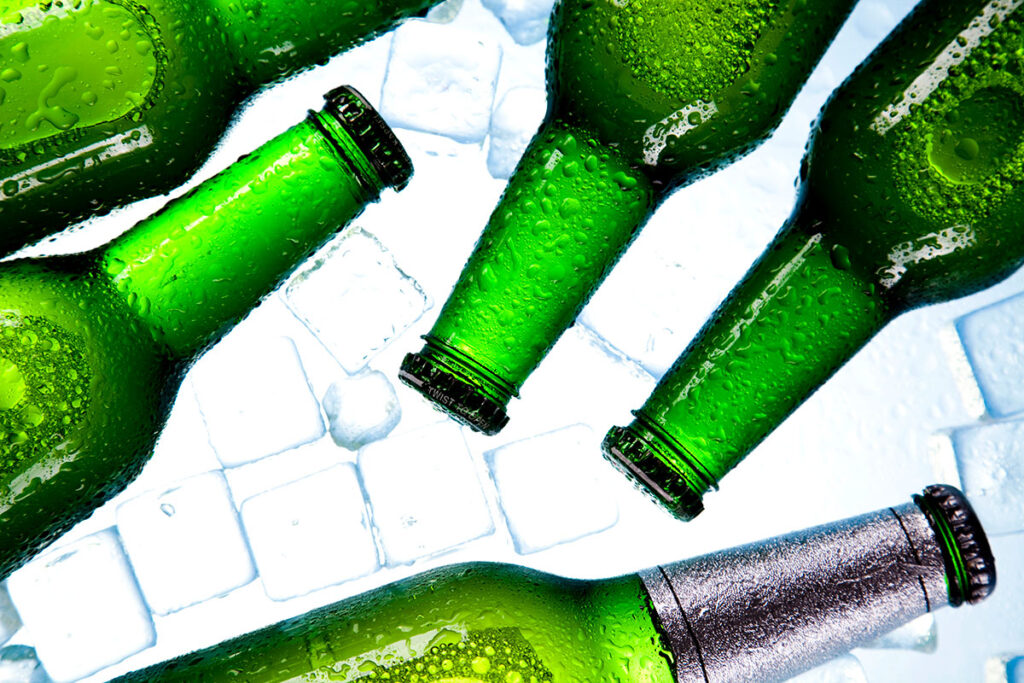
If you’re labeling cans or bottles for beverages, sauces, cold brew, or any product that lives in a fridge or cooler, you are dealing with one of the harshest environments for labels.
At every stage, temperature changes and humidity create condensation on the surface of the can or bottle. That moisture is the main reason standard paper labels fail so often in these applications.
Paper labels have a place in packaging, but they’re rarely the right choice for beverages or cold items.
Paper is porous. It readily absorbs moisture from condensation, spills, and handling. Wet paper loses strength quickly and is prone to tearing and peeling.
Many paper labels use adhesives designed for dry, room temperature conditions. These adhesives can:
As paper absorbs water, it expands. When it dries, it contracts. That movement creates wrinkles and bubbles, especially on curved surfaces like cans and bottles.
Standard inks and coatings on paper are not always designed for moisture or hand oils. They can:
If your product is meant to be chilled, displayed in a cooler, or submerged in ice, traditional paper labels almost always underperform.
If your product is meant to be consumed cold or stored in a refrigerator, paper labels are simply not a viable option for professional branding. The industry standard for these environments is vinyl or PVC.
At The Bumper Sticker, we specialize in high quality vinyl materials because they solve every issue presented by paper.
Vinyl is a plastic based material. It is completely non porous, meaning it does not absorb water. When condensation forms on a vinyl label, the water simply beads up and rolls off. The label itself remains crisp, colorful, and structurally sound, regardless of how much the bottle sweats.
Vinyl labels are typically paired with solvent based or permanent adhesives that are designed to resist moisture. Even if the bottle is submerged in an ice chest full of melting water, the bond remains secure. The adhesive does not break down when wet, ensuring the label stays exactly where you placed it.
Vinyl is inherently flexible. It can expand and contract with the container without tearing or wrinkling. This makes it ideal for the temperature swings involved in shipping and refrigeration. The UV protective laminate often used on vinyl labels adds another layer of durability, protecting the ink from fading or running.
It’s easy to think of a label as just a sticker, but to your customer, the label is the brand.
Imagine a customer at a barbecue reaching into a cooler. They pull out two drinks. One has a pristine, glossy label that feels smooth to the touch. The other has a soggy, peeling label that leaves gray paper residue on their fingers. Which product feels nicer to drink? Which one feels like a premium purchase?
When a label disintegrates, it subconsciously signals to the consumer that the product inside might also be low quality. It suggests that the manufacturer cut corners. Conversely, a label that withstands signals professionalism and attention to detail. Investing in the right material is an investment in your brand’s reputation.
Working with an experienced label printer means you do not have to guess which combination of film, adhesive, and finish will stand up to condensation and cold.
A typical process might include:
The goal is to prevent surprises in the field and keep your labels looking as good in the cooler as they did on the proof.
This is a critical distinction. Water resistant means the label can handle a few splashes or light humidity but will eventually fail if soaked. Waterproof means the material is completely impervious to water. Vinyl labels are waterproof. They can be fully submerged in water (like in an ice chest) without damaged to the material or the print.
Generally, no. For the best adhesion, labels should be applied to a clean, dry surface at room temperature. Once the adhesive has set (which usually takes 24 to 48 hours to fully cure), the bottle can be chilled, frozen, or soaked without issue. Applying a sticker to a bottle that is already wet from condensation will prevent the glue from bonding to the surface.
Vinyl is a premium material, so it typically costs more than standard paper. However, the cost difference is often negligible when you consider the waste factor. If paper labels ruin your product presentation or fall off during shipping, the cost to your brand is much higher. The durability and professional finish of vinyl provide a much higher return on investment.
Yes, but the texture reduces the surface area for the adhesive to grab onto. For textured cans or bottles, it’s important to use a vinyl label with a strong, permanent adhesive. Standard vinyl works well on smooth glass and smooth aluminum. If your packaging has a heavy texture, testing a sample first is always recommended.
Clear labels can look fantastic, giving a “no label” look that shows off the product inside. However, they’re almost always made of a synthetic plastic material similar to vinyl. Paper cannot be clear. If you want a clear look, you’re automatically moving into the durable, waterproof category, which is perfect for beverages.
Many film-based labels and adhesives are suitable for refrigeration and some freezing conditions, but not all. Freezer environments can be more demanding, especially for applications at very low temperatures. If your product is frozen, mention both the application temperature and storage temperature when ordering labels so materials can be chosen accordingly.
Condensation and cold are hard on labels, especially on cans and bottles that move through fridges, coolers, and customers’ hands. While paper labels have their place, they are rarely the right tool for this particular job.
In the end, your label is the final salesperson for your product. It has to do its job even when conditions get tough. If your product is destined for a fridge, a cooler, or a bucket of ice, standard paper labels will inevitably let you down.
If you’re unsure whether your current labels are built for the environments they see, this is a good time to review your options with The Bumper Sticker who understands both design and durability. A label that stays put and looks sharp does more than survive. It quietly does its job every time someone reaches into the cooler.
|
Uploaded
Failed
|
 |